
Chapter 06: Akhlaqiyat (Islamic Ethics) – Developing a Noble Character in Everyday Life
Meta Title: Chapter 06: Akhlaqiyat (Islamic Ethics) – Developing Noble Character in Everyday Life
Meta Description: Learn how Islamic ethics (Akhlaqiyat) shape a Muslim’s daily life through honesty, patience, kindness, humility, and justice according to the Quran and Sunnah.
Focus Keyword: Akhlaqiyat in Islam
Secondary Keywords: Islamic ethics, moral character in Islam, Quran on ethics, Muslim manners, Islamic values
Chapter 06: Akhlaqiyat (Islamic Ethics)
Introduction
Islam is a complete way of life that teaches Muslims how to worship Allah and how to interact with others through excellent manners and noble character. These moral values, known as Akhlaqiyat, are essential for building a peaceful society and strengthening one’s relationship with Allah.
A Muslim’s true character is revealed not only through worship but also through honesty, kindness, patience, forgiveness, and respect for others. Good character is one of the greatest blessings a believer can possess.
Understanding Akhlaqiyat
The Arabic word Akhlaq means morals, ethics, manners, and personal behavior. It refers to the qualities that guide a Muslim’s actions in every aspect of life.
Islam teaches believers to:
- Speak truthfully.
- Respect parents and elders.
- Help those in need.
- Be honest in business.
- Show kindness to everyone.
- Keep promises.
- Control anger.
- Forgive others.
- Practice patience during hardships.
These qualities reflect true faith and strengthen both individuals and communities.
Why Islamic Ethics Matter
A person may perform prayers, fast during Ramadan, and give charity, but good character is what truly reflects the beauty of Islam. Islamic ethics encourage believers to become trustworthy, compassionate, and responsible members of society.
When Muslims practice good manners, they inspire others through their actions and contribute to harmony within families, workplaces, and communities.
Lessons from the Quran
The Holy Quran repeatedly encourages believers to:
- Be honest in speech.
- Act with justice.
- Show mercy.
- Be patient in difficult times.
- Forgive those who wrong them.
- Avoid arrogance and pride.
- Respect the rights of others.
The Quran also warns against harmful behaviors such as lying, cheating, gossiping, backbiting, jealousy, and oppression. By following Allah’s guidance, Muslims develop strong moral values and become better servants of Allah.
The Noble Character of Prophet Muhammad ﷺ
Prophet Muhammad ﷺ was the perfect example of Islamic ethics. He was known as Al-Amin (the Trustworthy) because of his honesty and integrity.
His character was marked by:
- Truthfulness
- Mercy
- Humility
- Patience
- Forgiveness
- Justice
- Generosity
- Compassion
Even those who opposed him admired his honesty and fairness. Muslims are encouraged to follow his example in every aspect of life.
Essential Qualities of Good Character
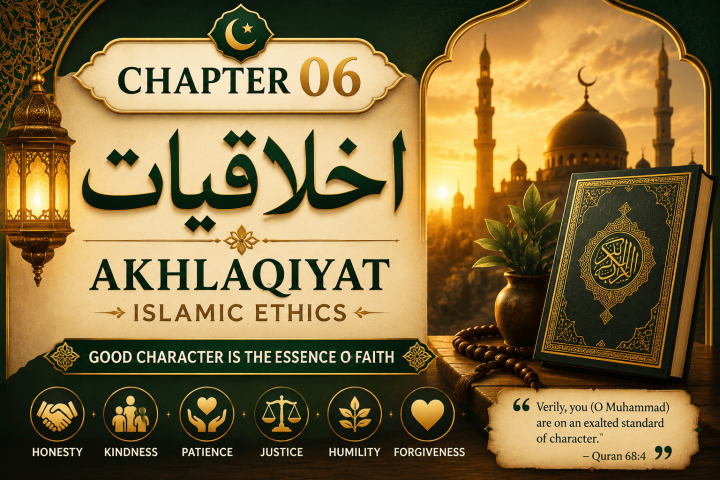
Honesty
Truthfulness builds trust and strengthens relationships. Islam forbids lying, cheating, and deception.
Kindness
A Muslim should treat parents, family, neighbors, and strangers with kindness and compassion.
Patience
Patience helps believers remain calm during trials and trust in Allah’s wisdom.
Humility
Humility protects a person from pride and encourages respect for others.
Forgiveness
Forgiving others brings peace to the heart and strengthens relationships.
Justice
Islam commands fairness and equality, even when dealing with people we dislike.
Applying Akhlaqiyat in Daily Life
Good character should be visible in every part of a Muslim’s life.
At Home
- Respect parents.
- Be kind to siblings.
- Care for family members.
- Speak politely.
At School
- Respect teachers.
- Help classmates.
- Avoid bullying.
- Study honestly.
At Work
- Be punctual.
- Complete responsibilities sincerely.
- Treat colleagues fairly.
- Avoid dishonesty.
In Society
- Help the poor.
- Respect neighbors.
- Care for the environment.
- Support justice and peace.
Habits Muslims Should Avoid
Islam teaches believers to stay away from actions that harm themselves and others, including:
- Lying
- Backbiting
- Gossip
- Cheating
- Pride
- Jealousy
- Breaking promises
- Disrespecting parents
- Using offensive language
- Oppressing others
Avoiding these behaviors protects both faith and society.
The Rewards of Good Character
Practicing good Akhlaq brings many blessings:
- The pleasure of Allah.
- Respect and trust from others.
- Peaceful family relationships.
- Strong friendships.
- Inner peace.
- Success in this life.
- Great rewards in the Hereafter.
A person with noble character becomes a positive example for others and earns lasting respect.
How to Improve Your Character
Every Muslim can strengthen their Akhlaq by:
- Reading and understanding the Quran.
- Following the Sunnah of Prophet Muhammad ﷺ.
- Speaking kindly and truthfully.
- Controlling anger.
- Helping those in need.
- Showing gratitude to Allah.
- Seeking forgiveness for mistakes.
- Practicing patience every day.
- Respecting everyone’s rights.
- Making sincere du’a for good character.
Conclusion
Akhlaqiyat is the heart of Islamic teachings. A believer’s true success is measured not only by acts of worship but also by honesty, compassion, humility, patience, and justice. The Quran and the life of Prophet Muhammad ﷺ provide the perfect guidance for developing noble character.
By practicing Islamic ethics every day, Muslims strengthen their faith, improve their relationships, and contribute to a peaceful and caring society. May Allah grant us the ability to develop excellent character and follow the beautiful example of His Messenger ﷺ. Ameen.
Frequently Asked Questions (FAQs)
What is Akhlaqiyat?
Akhlaqiyat refers to Islamic morals, ethics, manners, and character that guide a Muslim’s daily behavior.
Why is good character important in Islam?
Good character reflects true faith, earns Allah’s pleasure, and creates a peaceful and trustworthy society.
Who is the best example of Islamic ethics?
Prophet Muhammad ﷺ is the perfect example of honesty, kindness, justice, patience, and mercy.
How can Muslims improve their character?
By following the Quran and Sunnah, speaking truthfully, controlling anger, showing kindness, and seeking Allah’s guidance.
What are the main qualities of good Akhlaq?
Honesty, patience, kindness, humility, forgiveness, justice, gratitude, and respect for others.
SEO Keywords: Akhlaqiyat in Islam, Islamic Ethics, Moral Character, Good Manners in Islam, Quran and Ethics, Muslim Character, Islamic Values, Noble Character, Prophet Muhammad ﷺ, Deen.
Hashtags:
#Akhlaqiyat #Islam #Quran #QuranPak #IslamicEthics #GoodCharacter #Deen #IslamicKnowledge #Muslim #IslamicEducation #ProphetMuhammad #IslamicValues #Faith #MuslimLifestyle