
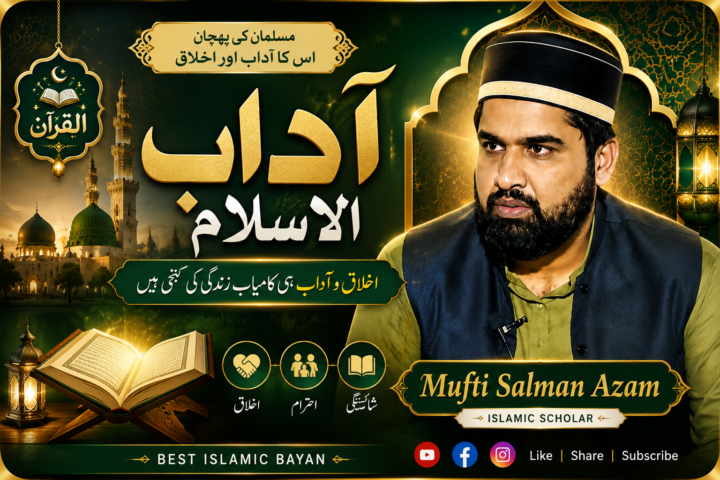

Best Islamic Bayan on Adaab | Mufti Salman Azam – A Complete Guide to Islamic Manners and Etiquette
Meta Title
Best Islamic Bayan on Adaab | Mufti Salman Azam | Islamic Manners Explained
Meta Description
Read a comprehensive guide inspired by Mufti Salman Azam’s Islamic bayan on Adaab. Learn the importance of Islamic manners, respect, kindness, honesty, humility, and the etiquettes taught in Islam.
Focus Keyword
Best Islamic Bayan on Adaab
Related Keywords
- Mufti Salman Azam Bayan
- Islamic Adaab
- Islamic Manners
- Islamic Etiquette
- Islamic Teachings
- Good Character in Islam
- Islamic Morality
- Sunnah Manners
- Respect in Islam
- Muslim Character
Best Islamic Bayan on Adaab | Mufti Salman Azam
Islam is not only a religion of worship but also a complete way of life. Every aspect of a Muslim’s daily routine is guided by the teachings of the Qur’an and the Sunnah of Prophet Muhammad ﷺ. Among these teachings, Adaab (Islamic manners and etiquette) occupies a special place because it shapes a person’s character, relationships, and society.
The Islamic bayan of Mufti Salman Azam on Adaab reminds Muslims that good manners are not optional—they are an essential part of faith. A believer who performs prayers, fasts, and gives charity should also strive to speak kindly, treat others with respect, fulfill promises, and display honesty in every situation.
This article explores the importance of Islamic manners, their benefits, and practical ways to implement them in everyday life.
Table of Contents
- What Is Adaab in Islam?
- Importance of Good Manners
- The Character of Prophet Muhammad ﷺ
- Respect for Parents
- Respect for Teachers and Scholars
- Kindness Towards Neighbours
- Speaking with Wisdom
- Honesty and Trustworthiness
- Humility and Modesty
- Patience and Forgiveness
- Etiquettes of Social Interaction
- Adaab in the Mosque
- Islamic Manners Online
- Benefits of Good Character
- Conclusion
- FAQs
What Is Adaab in Islam?
The Arabic word Adaab refers to proper manners, etiquette, discipline, and respectful behavior. Islam teaches Muslims to maintain good conduct in every situation.
Adaab includes:
- Respecting elders
- Showing mercy to children
- Speaking politely
- Helping others
- Being truthful
- Keeping promises
- Maintaining cleanliness
- Showing gratitude
- Being patient
- Avoiding arrogance
These qualities strengthen both individual character and society.
Why Are Good Manners Important in Islam?
Good manners are repeatedly emphasized in Islamic teachings. Worship and character go hand in hand. A person who behaves kindly earns the love of people and seeks the pleasure of Allah.
Islam teaches that every interaction is an opportunity to perform a good deed. Greeting someone warmly, smiling sincerely, helping a person in need, and speaking gently are all acts that carry great value.
When Muslims adopt excellent manners, families become stronger, communities become more peaceful, and trust grows among people.
The Noble Character of Prophet Muhammad ﷺ
The life of Prophet Muhammad ﷺ is the greatest example of Adaab.
He was known for:
- Honesty
- Compassion
- Mercy
- Justice
- Forgiveness
- Humility
- Generosity
- Patience
Even those who opposed him acknowledged his truthfulness and trustworthy nature. His example teaches Muslims that real greatness lies in good character rather than wealth or status.
Respect for Parents
One of the highest forms of Adaab is honoring parents.
Islam encourages believers to:
- Speak softly to parents.
- Listen respectfully.
- Care for them in old age.
- Pray for their well-being.
- Avoid harsh words.
Serving parents with sincerity is among the most rewarding deeds in Islam.
Respect for Teachers and Scholars
Teachers dedicate their lives to spreading knowledge. Respecting them reflects appreciation for knowledge itself.
Students should:
- Listen attentively.
- Avoid interrupting.
- Ask questions politely.
- Thank their teachers.
- Apply what they learn.
Respect for scholars also means valuing authentic Islamic knowledge and practicing it with wisdom.
Kindness Towards Neighbours
Islam places great emphasis on the rights of neighbours.
Good neighbourly conduct includes:
- Offering help during difficult times.
- Sharing food and happiness.
- Avoiding actions that cause harm.
- Greeting neighbours warmly.
- Respecting privacy.
Strong neighbourhoods are built on kindness and mutual respect.
Speaking with Wisdom
Words can heal hearts or cause pain.
Islam teaches believers to:
- Speak the truth.
- Avoid gossip.
- Refrain from backbiting.
- Stay away from insults.
- Use respectful language.
- Think before speaking.
Kind speech creates peace and strengthens relationships.
Honesty and Trustworthiness
Truthfulness is among the defining qualities of a believer.
Honesty applies to:
- Business
- Family
- Education
- Employment
- Friendships
- Public dealings
Trust is built over time through consistent honesty and integrity.
Humility and Modesty
Humility means recognizing that all blessings come from Allah.
A humble person:
- Does not boast.
- Treats everyone fairly.
- Accepts advice.
- Appreciates others.
- Remains grateful.
Modesty is reflected in speech, clothing, and behavior.
Patience and Forgiveness
Life brings challenges to everyone.
Islam encourages believers to:
- Control anger.
- Forgive mistakes.
- Stay patient in hardship.
- Respond to evil with goodness.
- Trust Allah during trials.
Patience leads to inner peace and spiritual growth.
Etiquettes of Social Interaction
Daily interactions should reflect Islamic values.
Examples include:
- Greeting with السلام عليكم
- Smiling sincerely.
- Keeping promises.
- Respecting personal boundaries.
- Avoiding unnecessary arguments.
- Being punctual.
- Helping those in need.
Simple acts of courtesy make a significant difference.
Adaab in the Mosque
The mosque deserves special respect.
Visitors should:
- Enter calmly.
- Maintain cleanliness.
- Keep voices low.
- Focus on worship.
- Respect fellow worshippers.
- Avoid disturbing others.
Proper etiquette enhances the spiritual atmosphere of the mosque.
Islamic Manners in the Digital Age
Modern communication also requires Adaab.
Muslims should:
- Verify information before sharing.
- Avoid spreading rumors.
- Use respectful language online.
- Protect others’ privacy.
- Refrain from offensive comments.
- Share beneficial knowledge.
Islamic values remain relevant across every platform.
Benefits of Practicing Adaab
Developing good manners offers numerous benefits:
- Stronger faith
- Better family relationships
- Greater respect in society
- Peaceful communities
- Improved friendships
- Personal discipline
- Emotional maturity
- Positive reputation
- Reward from Allah
- A closer connection to Islamic teachings
Good character leaves a lasting impact on everyone we meet.
Conclusion
The Islamic bayan of Mufti Salman Azam reminds believers that Adaab is not merely about outward etiquette but about cultivating a heart filled with sincerity, humility, compassion, and respect. A Muslim’s worship becomes more beautiful when accompanied by excellent character.
By following the teachings of the Qur’an and the Sunnah, Muslims can develop manners that strengthen families, inspire communities, and bring them closer to Allah. Every smile, kind word, honest action, and respectful interaction becomes an opportunity to earn reward and spread goodness.
Frequently Asked Questions
What does Adaab mean in Islam?
Adaab refers to Islamic manners, etiquette, discipline, respect, and good character in everyday life.
Why is Adaab important?
It strengthens faith, improves relationships, and reflects the teachings of Islam.
Who is the best example of Islamic manners?
Prophet Muhammad ﷺ is the perfect example of kindness, honesty, humility, patience, and compassion.
How can Muslims improve their manners?
By studying the Qur’an, following the Sunnah, speaking kindly, practicing honesty, respecting others, and making sincere efforts every day.
Can Islamic manners be practiced online?
Yes. Respectful communication, honesty, avoiding rumors, and maintaining good conduct online are all part of Islamic Adaab.
Internal Linking Suggestions
- Importance of Salah in Islam
- The Life of Prophet Muhammad ﷺ
- Islamic Ethics and Morality
- Rights of Parents in Islam
- Daily Sunnah Practices
Mufti Salman Azam delivering an Islamic bayan on Adaab, explaining Islamic manners, respect, kindness, honesty, and the teachings of Islam.
“A professional YouTube-style thumbnail featuring Mufti Salman Azam delivering an Islamic lecture, elegant green and gold Islamic theme, mosque silhouette, glowing Quran, Arabic geometric patterns, high contrast, cinematic lighting, 16:9.”
Tags
Islam, Adaab, Mufti Salman Azam, Islamic Bayan, Islamic Manners, Islamic Teachings, Sunnah, Good Character, Respect in Islam, Muslim Lifestyle
#Islam #IslamicBayan #Adaab #MuftiSalmanAzam #IslamicTeachings #GoodCharacter #IslamicKnowledge #Muslim #Sunnah #Quran #IslamicReminder #Deen #IslamicLecture #Respect #Faith